Disability Human Rights Promotion Society (DHRPS), as the Lead Secretariat of the Inclusive Network Nepal, continues to advance collective action to protect the rights of children especially children with disabilities who remain disproportionately represented in institutional care due to poverty, lack of local services, migration, and persistent social beliefs that institutions offer better opportunities.
At the heart of this effort are youth with disabilities, who are no longer willing to be passive recipients of policy decisions. Instead, they are emerging as advocates, rights defenders, and change makers, shaping conversations about child rights, family-based care, and the future they want to see.
Why Youth-Led Advocacy Matters Now
For many young persons with disabilities, institutionalization is not a distant concept—it is a lived reality or a looming risk. Youth participants emphasized that advocacy is no longer optional; it is a necessity to prevent continued child separation and to ensure that deinstitutionalization (DI) policies genuinely include children with disabilities.
They highlighted that without strong advocacy:
- Children with disabilities are more likely to be institutionalized
- Family-based care options remain weak or unavailable
- Local governments fail to prioritize inclusive child protection services
- Youth voices are excluded from decisions that directly affect their lives
Youth called for a future where rights, not charity, guide child protection systems.
Deinstitutionalization in a Federal Nepal: Gaps and Opportunities
Nepal’s federal system has transferred significant responsibility for child protection and social services to local governments. However, youth and civil society actors alike noted that capacity, resources, and coordination remain limited, increasing the risk of unnecessary child separation—particularly for children with disabilities.
In this context, community-based organizations and youth-led advocacy play a critical role in:
- Strengthening gatekeeping mechanisms
- Supporting families before crisis leads to separation
- Holding local and national governments accountable
- Ensuring disability-inclusive deinstitutionalization policies
Strengthening Collective Action Through Partnership
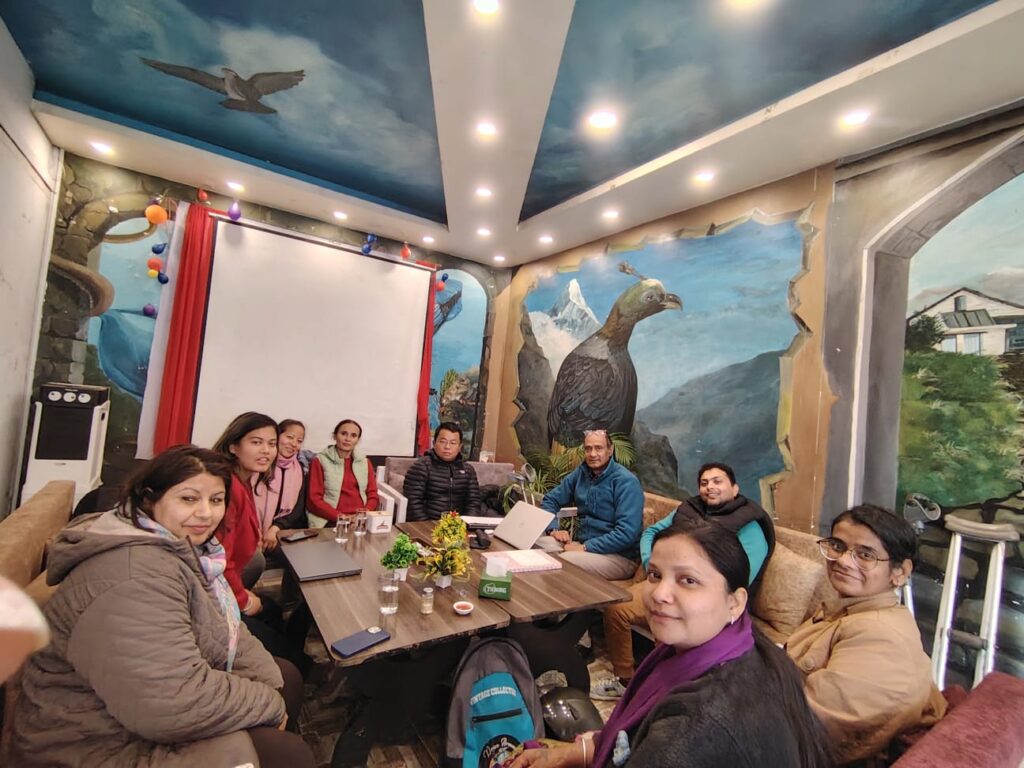
Under the DHRPS–ATOS–CISU partnership, a coordination meeting was successfully held, bringing together change makers united by the shared values and vision of Inclusive Network Nepal.
The discussion focused on:
- Building a common understanding of deinstitutionalization (DI)
- Ensuring DI frameworks fully include children with disabilities
- Documenting and sharing good practices from community and youth-led initiatives
- Positioning youth voices as central to policy reform and advocacy
This collaboration reinforces the belief that deinstitutionalization must be a collective national agenda, not a fragmented or project-based effort.
Looking Ahead: The Future Youth Are Demanding
Youth with disabilities are clear in their message:
The future must be one where every child grows up in a family environment, with access to inclusive education, community-based services, and dignity—not in institutions.
Together with parents, caregivers, civil society, and development partners, DHRPS is working to ensure that:
- Deinstitutionalization is preventive, inclusive, and rights-based
- Children with disabilities are not left behind in reform processes
- Youth leadership and lived experience inform national policy agendas
Advocacy today is shaping the systems of tomorrow.
And youth with disabilities are leading the way.