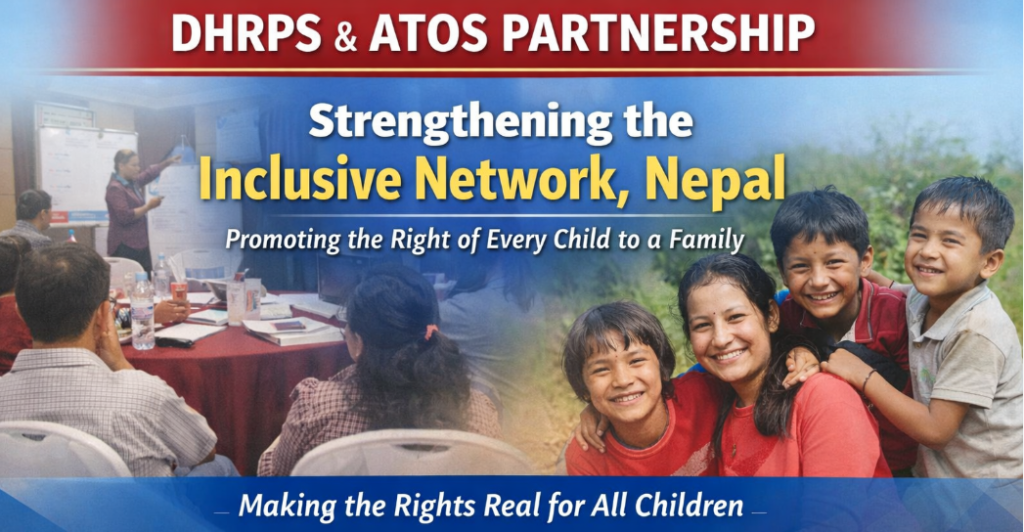
Disability Human Rights Promotion Society (DHRPS), in partnership with the Danish organization ATOS – Alternatives to Separation, aim strengthening the Inclusive Network, Nepal. The intervention focuses on enhancing organisational capacity and advocacy skills among civil society organisations working to prevent child separation and promote family-based care. DHRPS serves as the Lead Secretariat of the Inclusive Network, coordinating activities in close collaboration with ATOS and the Network’s Core Group.
Over the intervention period, the Inclusive Network brought together civil society organisations from across Nepal, representing both disability-focused and mainstream child protection actors. This marked the first time organisations working with children with and without disabilities formally collaborated within one national forum to advocate for the rights of all children.
The Network completed its registration process, approved its statutes, and established a Core Group of five organisations to guide strategic direction. Two representatives from each member organisation participated in network meetings and capacity-strengthening activities, ensuring both management and field perspectives were represented.
A series of workshops and online meetings were conducted to strengthen organisational frameworks and advocacy skills. These activities resulted in:
- A shared understanding of de-institutionalization (care reform) in the Nepalese context
- A collectively agreed advocacy strategy and action plan spanning local and national levels
- Improved knowledge of prevention, gatekeeping mechanisms, and family reintegration practices
- A documentation plan to collect and share good practices from across Nepal
Online meetings were held, combining coordination sessions with knowledge-sharing seminars where member organisations presented field experiences and emerging community-based solutions.
The intervention responded to ongoing concerns regarding child institutionalization in Nepal. At the time of implementation, an estimated 12,900 children were living in child care homes, while approximately 6,000 children with disabilities were placed in residential resource classes and a further 2,000 in special schools. Evidence continued to show that the majority of children in institutional care had living parents and were separated due to poverty, lack of services, migration, or social exclusion.
The Network actively highlighted risks related to unregulated institutions, orphan trafficking, and policy inconsistencies—particularly affecting children with disabilities. Findings from earlier research conducted by ATOS and partners were used to inform advocacy messages calling for harmonized government policies and investment in community-based services.
The Inclusive Network increased its visibility by engaging in national child protection discussions and contributing to civil society forums. Two national-level advocacy events were conducted to promote the Right of Every Child to a Family and to call for the development of a comprehensive National Care Reform (De-Institutionalization) Strategy.
Internationally, the Network strengthened ties with child protection networks in Denmark, Kenya, and emerging partners in Colombia. Participation in regional meetings, including a civil society exchange in Nairobi, enabled Nepalese organisations to learn from Kenya’s experience in developing a national care reform strategy.
The intervention was coordinated by Mr. Shudarson Subedi, Director at DHRPS and a leading figure in Nepal’s disability rights movement, with extensive experience in national and international advocacy. DHRPS managed day-to-day implementation together with the Core Group, while ATOS held overall responsibility for monitoring, reporting, and financial management in line with CISU regulations
Through strengthened cooperation, shared knowledge, and collective advocacy, the intervention contributed to building a stronger civil society voice in Nepal advocating for the prevention of child separation. The Inclusive Network emerged better equipped to influence policy discussions, promote community-based services, and defend the right of all children, including children with disabilities, to grow up in a family environment.
Disability Human Rights Promotion Society (DHRPS)
Lead Secretariat – Inclusive Network, Nepal
In partnership with
ATOS – Alternatives to Separation